Explore our precision-engineered product lines designed for demanding industrial, commercial, medical, and sustainable lighting applications.
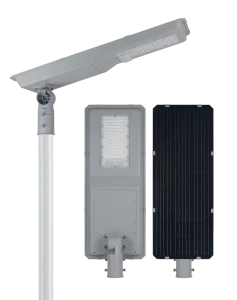
The global warehousing and logistics industry is experiencing unprecedented scaling driven by digital e-commerce, globalized supply chains, and just-in-time manufacturing processes. Historically, warehouse operations relied on high-pressure sodium (HPS) or metal halide lamps. These obsolete systems are characterized by slow warm-up times, low color rendering index (CRI), massive thermal emissions, and short service lifespans.
Modern commercial operations require smart, energy-efficient, and long-lasting solutions. By upgrading to Industrial High-Efficiency LED Linear systems, warehouse managers can achieve immediate energy cost reductions of up to 60-80% when paired with automated smart controls.
In high-bay racking systems, horizontal and vertical lighting distribution is critical for accurate scanning, error reduction, and occupational safety. The paradigm shift towards smart warehouses incorporating autonomous mobile robots (AMRs) and automated storage/retrieval systems (AS/RS) calls for continuous, uniform, and flicker-free lighting layout planning. High performance industrial linear luminaires provide the precise directional photometrics required to eliminate dark zones between towering shelving racks.
High throughput operations require continuous 24/7 reliability, making energy efficiency and heat management a primary financial metric.
OSHA and regional environmental councils require minimum lux thresholds to ensure workplace safety and lower error rates during manual picking.
Modern layouts require integration with IoT sensors and dimming protocols to sync with machine vision systems in dark warehouses.
LED warehouse lighting has evolved beyond basic illumination. The state-of-the-art involves intelligent drivers, integrated communication chips, and high-efficacy light sources that easily exceed 150 lm/W to 200 lm/W. Standard designs use advanced aluminum extrusions for passive heat management, extending the luminaire's operational lifespan beyond 100,000 hours with negligible luminous decay.
Utilizing cold-forged pure aluminum and multi-fin heat sink geometries ensures maximum thermal dissipation. Lower junction temperatures prevent premature phosphor degradation, ensuring consistent color temperature (CCT) over decades of continuous use.
Integrating RS485 communication protocols, DALI-2 interfaces, and wireless mesh topologies (such as Zigbee and Bluetooth Mesh) allows facilities to implement automated zone scheduling, harvest daylight, and gather real-time energy usage diagnostics.
UGR (Unified Glare Rating) below 19 is achieved using special prismatic diffusers and optical grille profiles. This reduces visual fatigue for logistics operators working long shifts, directly driving productivity and safety.
Our rigorous quality control and engineered designs produce significant, measurable improvements in energy savings and operating life.
Exporting industrial-grade luminaires worldwide requires strict compliance with regional standards and an understanding of unique local environment conditions. A layout designed for a cold-storage logistics facility in Scandinavia has different requirements than a deep-bay warehouse located in the Middle East.
Products must carry UL/cUL listing for safety compliance. To qualify for state-level energy rebates, fixtures must meet DesignLights Consortium (DLC) Premium efficacy requirements. Dimming protocols typically require 0-10V analog configurations.
CE marking, RoHS compliance, and ErP directives dictate energy limits and eco-design standards. DALI and DALI-2 protocols are the standard for digital lighting controls in European logistics networks.
Extreme ambient temperatures call for driver units with high-temperature tolerance ratings (up to 65°C ambient) and IP65/IP66 ingress protection to safeguard against fine sand and dust penetration.
Guangzhou Bluu Light Co., Ltd. is a professional Commercial LED Lighting Manufacturer specializing in smart lighting solutions for retail, office, industrial, and commercial environments. Based in Guangzhou, China, the company focuses on the development, manufacturing, and supply of energy-efficient LED lighting systems designed to improve illumination quality, operational efficiency, and sustainability across a wide range of applications.
With a strong commitment to innovation and performance, Bluu Light offers comprehensive lighting solutions for commercial buildings, office spaces, retail stores, warehouses, industrial facilities, hospitality venues, educational institutions, healthcare environments, and outdoor infrastructure projects. The company integrates advanced LED technology with intelligent lighting controls to help customers optimize energy consumption, enhance visual comfort, and reduce long-term operating costs.
Bluu Light emphasizes product reliability, engineering expertise, and project-oriented customization. Its experienced technical team works closely with clients, architects, contractors, and distributors to develop lighting solutions that meet specific project requirements, industry standards, and environmental objectives. From lighting design consultation and product selection to manufacturing and project support, the company provides end-to-end services for diverse commercial lighting applications.
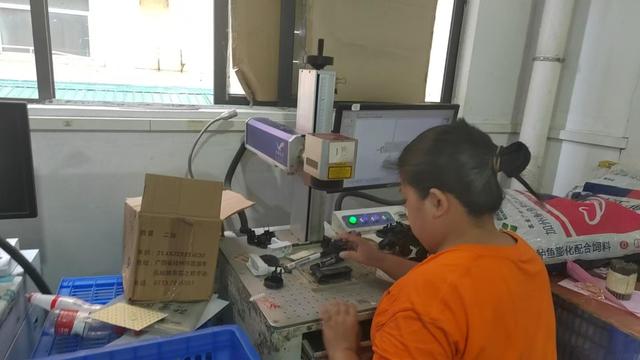
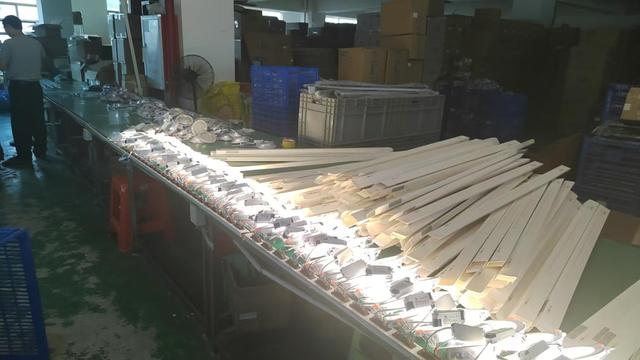
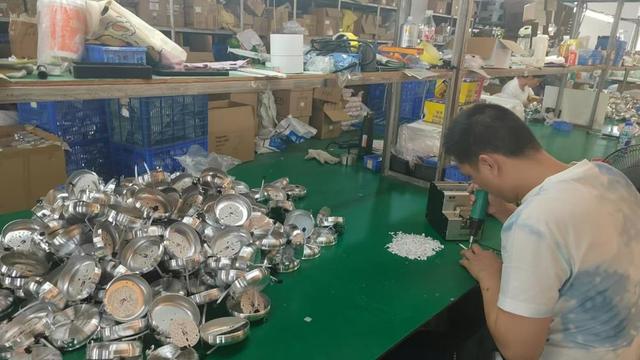
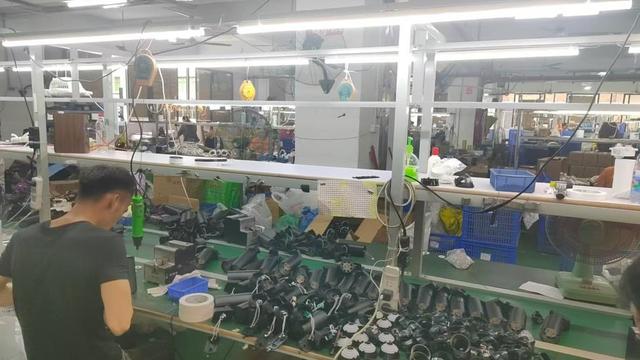
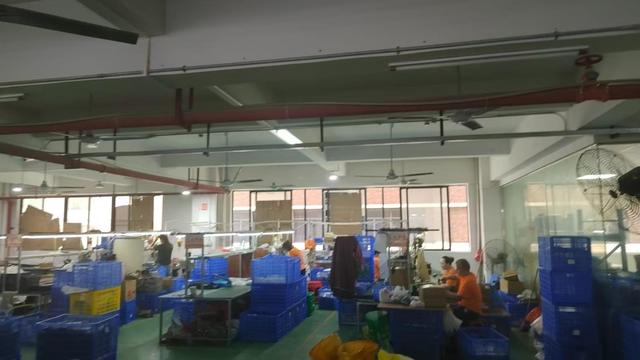
Equipped with modern production facilities and rigorous quality management systems, Bluu Light maintains strict control throughout the manufacturing process to ensure consistent product performance and durability. The company continually invests in research and development to advance smart lighting technologies, energy-saving innovations, and intelligent control systems that support the evolving needs of global markets.
Serving customers across North America, Europe, Asia, the Middle East, South America, and other international regions, Guangzhou Bluu Light Co., Ltd. is dedicated to delivering reliable commercial LED lighting solutions that combine efficiency, functionality, and long-term value for modern businesses and infrastructure projects worldwide.
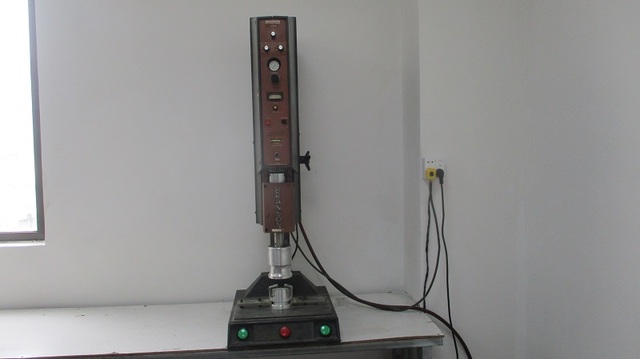
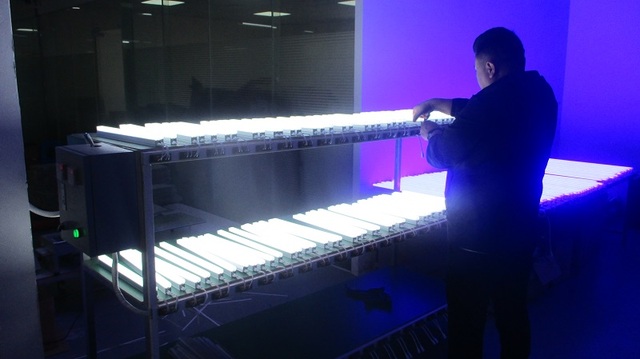
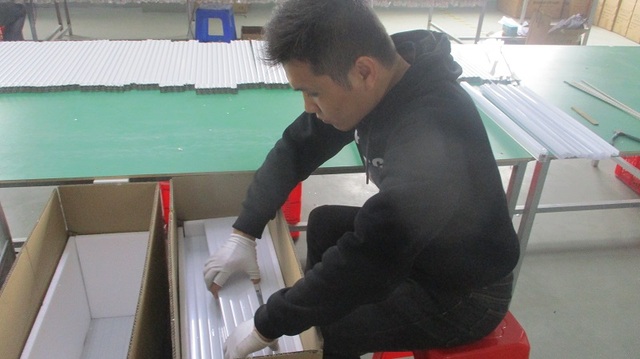
Achieving optimum performance from an industrial luminaire installation requires a systematic design process. Industrial lighting design is no longer just about placing fixtures to meet basic light level targets. Dialux simulation software is used to design spaces for optimal vertical foot-candles, visual uniformity, and zero glare at driver sightlines.
The spacing criteria of luminaires relative to mounting heights is critical. High-bay warehouses with ceiling heights exceeding 10 meters benefit from narrow-beam lenses (e.g., 30°x90° or 60°x120° polar distributions) to focus light directly onto the floor and product faces, rather than wasting energy on top shelving structures.
Conversely, low-bay open storage and sorting facilities rely on wider, diffuse distributions (such as 120° flat diffusers) to create comfortable visual conditions across large work zones.
Explore more systems designed for educational facilities, architectural projects, office workshops, and warning environments.
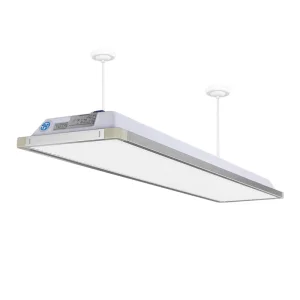
The next decade of industrial lighting focuses on Human-Centric Lighting (HCL) and total system integration. As warehousing operates across shifts 24 hours a day, keeping lighting profiles aligned with human circadian rhythms can improve alertness and workplace safety. By dynamically shifting color temperature from a clean, high-energy 5000K daylight white during peak morning schedules to a warmer 3500K in late-night shifts, human stress and fatigue can be mitigated.
In parallel, industrial LED fixtures are shifting to become nodes in IoT communication networks. Equipped with optical transceivers, lights can facilitate LiFi (Light Fidelity) data transmission, offering secure, high-speed indoor communication where standard RF signals are blocked by high-density steel shelving.
Additionally, the incorporation of edge-AI processors directly into the driver ballast enables predictive maintenance alerts. These systems monitor driver degradation and heat spikes, communicating maintenance needs directly to the facility manager before failure occurs.
Get answers to critical industrial lighting design, compliance, and energy savings questions.
 Bluu Light