How to Choose LED Lighting for Your Business?

Time:2026-10-27 Author:Liam
0%

Choosing LED lighting for a business involves more than replacing old bulbs with brighter ones. The right system should support safety, visual comfort, operating costs, and daily work. A restaurant may need warm, flattering light, while a warehouse needs clear aisles and dependable illumination. Offices often require low-glare fixtures near computer screens. Small details matter. Flicker, color temperature, beam angle, and controls can influence comfort and productivity.

Many owners ask, “why are businesses switching to led lighting?” Lower energy use is a major reason, but it is not the only one. LEDs can provide longer service life, better dimming control, and more flexible installation options. However, LED lighting is not automatically the best choice. Poorly selected products may create glare, uneven brightness, or disappointing color quality. I have seen a low-cost retrofit look efficient on paper but feel unpleasant in a working space. That lesson deserves attention.

This guide explains how to compare LED fixtures, calculate potential savings, and select products for different commercial environments. Look for clear lumen ratings, color-rendering information, credible safety certifications, and realistic warranty terms. Check compatibility with existing wiring, sensors, and dimmers. Local electrical requirements should also be reviewed by a qualified professional. A basic lighting audit can reveal dark corners, wasted output, and maintenance problems before money is spent. The process may take longer than choosing the cheapest fixture. It usually produces a more reliable result.
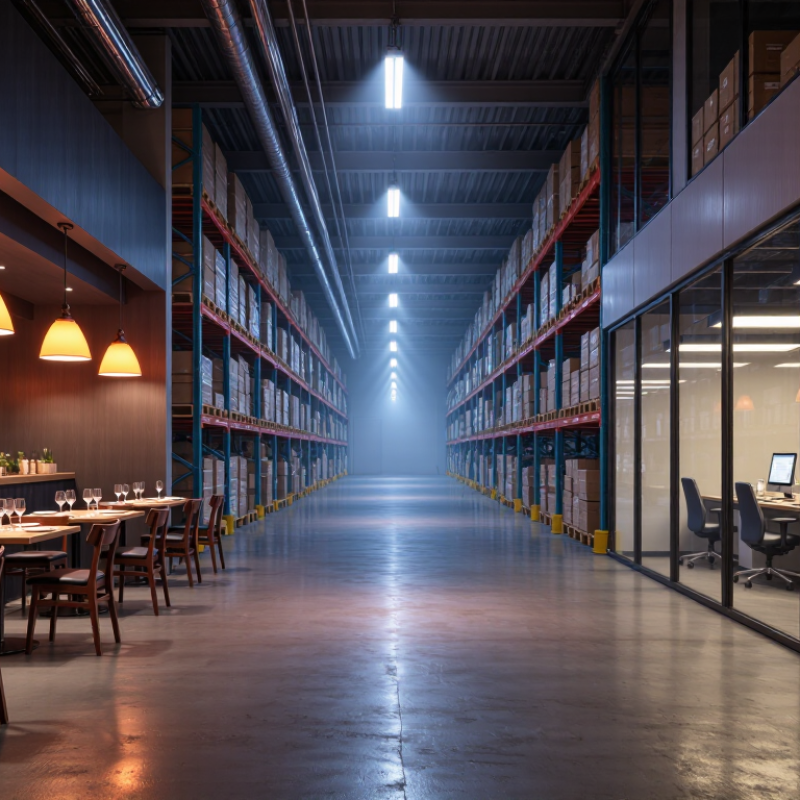
How to Choose LED Lighting for Your Business?

Set Business Lighting Goals with DOE’s 75% LED Energy-Saving Benchmark

How to Choose LED Lighting for Your Business?

Start with the target. The U.S. Department of Energy highlights a 75% energy-saving benchmark for LED lighting compared with incandescent lamps. Use it as a planning reference, not a guaranteed result. Actual savings depend on operating hours, fixture quality, controls, and existing equipment. A busy store, warehouse, or office may reduce costs significantly when lights run eight to twelve hours daily. Review twelve months of electricity bills before selecting products. Then estimate energy use, replacement costs, and expected payback.

Choose lighting that supports daily work, not only lower wattage. Measure the required brightness in lumens, and check color temperature and color rendering. A retail aisle may need clear, balanced light, while a warehouse needs consistent visibility across tall shelves. Motion sensors and daylight controls can reduce unnecessary operation. Test one area first. Compare brightness, shadows, glare, and employee comfort during real working hours. Small details matter. A poorly aimed fixture can waste light.

Tips: Record current wattage and operating hours. Request photometric data and safety documentation. Ask an electrician to review wiring and load capacity. Keep a simple pilot log for energy use, maintenance, and staff feedback. I have seen plans focus too heavily on the 75% figure. That can be misleading. Real performance sometimes falls short, especially when old controls remain unchanged. Revise the plan after testing, rather than trusting estimates alone.

Match Lumens, CCT, and CRI to Each Space Using IES Standards

How to Choose LED Lighting for Your Business?

Choosing LED lighting starts with the work performed in each space, not with wattage alone. IES recommendations provide useful illuminance targets for offices, retail areas, warehouses, and detailed task zones. Compare those targets with a fixture’s delivered lumens, not its advertised output. A high-lumen product can still create dark corners when spacing, mounting height, or surface color is ignored.

Measure the room carefully. A reception desk may need comfortable, balanced light, while a warehouse aisle needs controlled brightness and safe visibility. Use a neutral CCT around 3500K to 4000K for many workplaces, but warmer light may suit hospitality areas.

CRI matters near merchandise, food, artwork, and skin tones. Aim for CRI 80 or higher for general business use, then choose higher performance where color judgment affects decisions. Check the full spectral information when available.

Review the photometric layout against IES guidance before ordering. Glare can make a bright office feel tiring, even when the measured lux looks acceptable. I once treated uniformity as a minor detail; the floor plan looked efficient, but employees noticed harsh contrasts immediately. That mistake changed the design. Test a small zone, inspect it during working hours, and adjust spacing or optics before installation. Energy savings matter, but so do visual comfort, maintenance access, and reliable color over time.

Compare Fixture Efficiency Against DOE’s 100+ lm/W Commercial Range

Choosing LED lighting starts with the fixture’s delivered efficacy, not the diode’s advertised output. DOE references a commercial range above 100 lumens per watt, giving buyers a useful screening line. Compare fixture lumens with actual input watts, including the driver. A 150 W fixture producing 15,000 lumens reaches 100 lm/W. It may look acceptable on paper. Real performance can fall when lenses, controls, heat, or emergency components are included.

Ask for a current photometric report and confirm test conditions. Look for input wattage, delivered lumens, color temperature, and operating temperature. A warm warehouse ceiling can expose weak thermal design. During one field review, a fixture rated at 135 lm/W delivered less after protective optics were installed. The measured result was closer to 108 lm/W. Still useful, but not impressive everywhere. Mounting height and spacing also affect perceived brightness.

Use the DOE range as a comparison, not a promise of equal savings. Higher efficacy can reduce energy use, yet excessive spacing may create dark aisles and force higher output. Check uniformity, glare, flicker, warranty terms, and replacement access. I would also compare measured watts on site after installation. Spec sheets are necessary. They are not perfect. A small control failure can erase expected savings, and a lower-output fixture may work better when it delivers even light at the task surface.

Calculate Payback with DOE’s 25× Longer LED-Lifespan Data

How to Choose LED Lighting for Your Business?

Calculate Payback with DOE’s 25× Longer LED-Lifespan Data

Choosing LED lighting should begin with operating costs, not appearance alone. The U.S. Department of Energy states that quality LEDs use at least 75% less energy than incandescent lamps and can last up to 25 times longer. That lifespan changes maintenance planning. A warehouse replacing lamps every year may reduce ladder work, labor hours, and interruptions.

Use a simple payback calculation. Suppose one 100-watt incandescent lamp operates 4,000 hours annually. A comparable 15-watt LED uses about 340 fewer kilowatt-hours each year. At $0.15 per kilowatt-hour, that saves approximately $51 annually, before maintenance savings. If the LED installation costs $85 more, the energy-only payback is about 20 months. DOE lighting guidance also recommends evaluating lumen output, color quality, controls, and operating conditions rather than wattage alone.

Real projects are less tidy. Dirt, heat, dimming schedules, and poor fixture placement can reduce expected savings. I have seen payback estimates fail when installers ignored high ceilings and replacement labor. Check utility bills, annual operating hours, local electricity rates, and actual lamp failure records. The U.S. Department of Energy’s solid-state lighting research also emphasizes lumen maintenance, because rated life does not mean the lamp suddenly stops working. Ask for test data, warranty terms, and measured light levels. A cheaper fixture may create dark aisles, causing another retrofit sooner than expected.

Verify UL Safety, DLC Qualification, and 50,000-Hour L70 Ratings

How to Choose LED Lighting for Your Business?

Safety and efficiency should guide every commercial lighting decision. Verify that the complete LED fixture carries a valid UL safety certification. Do not rely on a supplier’s general statement or a component certificate. Check the exact model number, electrical rating, installation type, and certification status. A qualified electrician can also review wiring, heat clearance, and local code requirements before installation.

DLC qualification can improve project efficiency and may support available energy rebate programs. However, qualification can vary by product version and may change over time. Confirm the fixture appears on the current DLC database. Then review its tested wattage, light output, color quality, and operating conditions. The L70 rating matters too. A 50,000-hour L70 rating means the fixture is expected to retain about 70% of its initial light output after that period. It does not mean the fixture will never fail.

Tips: Request the latest UL documentation and DLC listing. Compare the report with the product label. Ask how heat, dust, voltage changes, and frequent switching affect performance. Review the warranty terms carefully, including labor coverage. A practical mistake is choosing the highest lumen output without checking glare or mounting height. Brightness alone can create uncomfortable workspaces. I would also measure light levels after installation, because real rooms rarely match laboratory conditions. Some assumptions may need correction.

How to Choose LED Lighting for Your Business?

Verify UL safety, DLC qualification, and a 50,000-hour L70 rating before selecting commercial LED lighting.

UL Safety Verification

Confirm that the product has been evaluated to applicable electrical and fire-safety requirements by an accredited certification organization.

DLC Qualification

DLC qualification indicates that a commercial lighting product meets published requirements for performance, quality, and energy efficiency.

50,000-Hour L70 Rating

L70 means the LED system is rated to provide at least 70% of its initial light output after 50,000 operating hours.

The chart shows how long a 50,000-hour L70 rating represents under common operating schedules. Actual service life can vary with temperature, controls, installation conditions, and product quality.

FAQS

Should LED lighting selection begin with wattage?

No. Start with the work performed, room size, mounting height, and required light levels. Wattage alone can mislead.

What are delivered lumens, and why do they matter?

Delivered lumens describe the light reaching the space from the complete fixture. Advertised output may ignore lenses, optics, and installation losses.

Which color temperature suits most workplaces?

Neutral light around 3500K to 4000K suits many offices and work areas. Warmer light may feel better in hospitality spaces.

When is a higher CRI rating important?

Use CRI 80 or higher for general business lighting. Choose higher performance near food, merchandise, artwork, or skin tones.

How can a bright fixture still create a poor workspace?

Incorrect spacing, high mounting, dark surfaces, or narrow optics can create shadows and dark corners. Brightness is not uniformity.

How should glare be checked before installation?

Review the photometric layout and inspect a small test zone during working hours. Harsh reflections may appear after installation.

What safety documents should businesses request?

Request current safety certification documents for the exact fixture model. Check electrical ratings, installation type, wiring, and local requirements.

What does a 50,000-hour L70 rating mean?

It suggests the fixture may retain about 70% of its initial light output after 50,000 hours. It does not guarantee failure-free operation.

Should lighting levels be measured after installation?

Yes. Real rooms differ from laboratory conditions. Measure key areas, then adjust spacing, optics, or controls when needed.

What mistake is easy to make when choosing commercial lighting?

Choosing the highest lumen output without checking glare, mounting height, or maintenance access is a common mistake. I made that assumption once.

Conclusion

Choosing LED lighting for your business starts with clear goals, such as lowering energy costs, improving visibility, and reducing maintenance. A useful benchmark is the potential for LED systems to cut lighting energy consumption by up to 75%. This helps answer the question, “why are businesses switching to led lighting?” Next, match each space with the right lumen output, color temperature (CCT), and color rendering index (CRI), following recognized lighting recommendations. Offices, retail areas, warehouses, and outdoor zones may all require different specifications.

When comparing fixtures, review efficiency, with many commercial products reaching or exceeding 100 lumens per watt. Estimate payback by considering energy savings, installation expenses, and LED lifespans that can be approximately 25 times longer than traditional lamps. Finally, verify electrical safety certification, efficiency qualification, and a reliable 50,000-hour L70 rating, which indicates expected useful life before brightness declines significantly. A careful evaluation ensures the selected system delivers dependable performance and long-term value.

Liam

Liam

Liam is a dedicated marketing professional with a profound expertise in the industry, where he excels at highlighting the unique advantages of our core products. With a keen understanding of market trends and consumer needs, Liam frequently updates our company’s professional blog, providing......