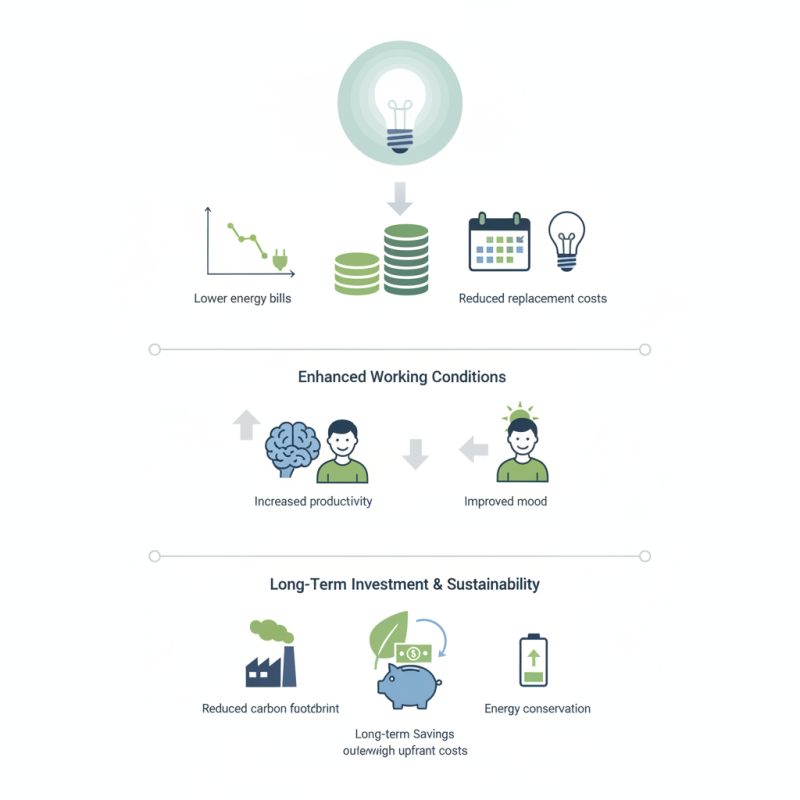
In recent years, many companies have begun to rethink their lighting options. A significant shift has been towards LED lighting solutions. So, why are businesses switching to LED lighting? The answer lies in cost efficiency and sustainability. Traditional lighting methods often waste energy. In contrast, LED lights consume less power and last longer. This translates to lower energy bills and reduced replacement costs.
Moreover, LED technology offers enhanced brightness and clarity. Employees benefit from better working conditions, which can increase productivity. Some businesses report noticeable mood improvements in their workplaces. However, the initial investment in LED systems may cause hesitation. Despite this, the long-term savings often outweigh the upfront costs.
In making the transition, companies highlight the importance of doing thorough research. A poorly planned implementation can lead to dissatisfaction. Thus, a careful approach is essential in ensuring that the switch is effective. Understanding why businesses are transitioning can shed light on broader environmental goals. These goals reflect a commitment to reducing carbon footprints and promoting energy conservation.
The evolution of lighting technologies has significantly impacted how businesses operate. Traditional incandescent lights have long been the norm. However, they are less energy-efficient and have higher operational costs. Businesses are now facing the need to cut down expenses. This has led them to explore better alternatives.
LED lights emerged as a game-changer. They last up to 25 times longer than incandescent lights. Companies are now attracted to their low power consumption. This shift can reduce energy bills drastically. Yet, despite the benefits, some businesses are hesitant to make the switch. Initial costs for LED installations can be high. This makes some decision-makers question the ROI.
Moreover, as technology evolves, newer lighting options continue to enter the market. There is always a concern about keeping up with the latest innovations. Some companies fear investing in LEDs, only to see newer technologies emerge soon after. Navigating this fast-paced landscape is no easy task. Balancing investment and sustainability can be tricky. However, understanding the benefits and innovations can guide businesses toward making informed choices.
LED technology has transformed commercial lighting. Companies now recognize its potential for significant cost savings. According to the U.S. Department of Energy, replacing traditional bulbs with LED fixtures can achieve energy savings of up to 75%. This change isn't merely about efficiency; it directly impacts the bottom line.
Commercial spaces benefit from longer-lasting LEDs. On average, an LED bulb lasts 15,000 to 50,000 hours. In contrast, incandescent bulbs endure only about 1,000 hours. Fewer replacements translate to reduced labor costs and less waste. However, the initial investment in LED technology can be discouraging for some businesses.
Moreover, LED lighting enhances productivity. Bright, natural-like lighting improves employee focus and reduces eye strain. A study from the Lighting Research Center revealed that proper lighting can increase worker efficiency by up to 20%. As more businesses switch to LEDs, they find not just savings but also a boost in overall employee satisfaction. However, it's essential to choose the right LED fixtures to fully realize these benefits.
| Lighting Type | Initial Cost (USD) | Average Lifespan (Years) | Energy Consumption (Watts) | Annual Maintenance Cost (USD) | Average Annual Savings (USD) |
|---|---|---|---|---|---|
| Incandescent | 1.00 | 1 | 60 | 10 | - |
| Halogen | 2.50 | 2 | 50 | 15 | - |
| CFL (Compact Fluorescent Lamp) | 4.00 | 7 | 13 | 8 | 20 |
| LED (Light Emitting Diode) | 10.00 | 15 | 10 | 5 | 50 |
Businesses are increasingly shifting to LED lighting due to its notable cost advantages over traditional lighting options. In a comparative cost analysis, LEDs show a 75% decrease in energy consumption compared to incandescent bulbs. This efficiency translates directly to lower electric bills, making it a smart choice for any business seeking to cut expenses.
Additionally, LED lights boast a longer lifespan, often lasting up to 25,000 hours. In contrast, traditional bulbs might only last 1,000 hours. This means less frequent replacements, resulting in reduced labor costs and waste. However, the initial investment for LEDs can be higher, which may lead some businesses to hesitate.
Tips: Consider gradual implementation of LEDs. Start with high-usage areas to quickly see savings. Don't overlook potential rebates or tax incentives that may ease upfront costs. Regularly evaluate your lighting needs as technology evolves, ensuring continued efficiency. Remember, the transition might feel daunting, but the long-term benefits are substantial.
Businesses are increasingly turning to LED lighting due to its impressive energy efficiency. Traditional lighting sources consume a large amount of electricity. In contrast, LED lights use significantly less energy, leading to reduced utility bills. This shift can result in substantial long-term savings for companies. Many organizations report cutting energy costs by up to 75% after switching to LEDs.
Maintenance costs are another critical factor. LED lights have a much longer lifespan compared to traditional bulbs. They can last up to 25,000 hours or more. This means fewer replacements and less labor involved in maintaining lighting systems. For businesses, this translates into less downtime and fewer maintenance checks. However, the initial cost of LED installation can be higher. A thoughtful analysis is necessary to assess the return on investment over time.
Transitioning to LED lighting is beneficial, but it's not without challenges. Some companies may struggle with the upfront costs. Additionally, there are varying qualities in LED products, which can lead to inconsistent results. Organizations must carefully research and choose reliable options. Despite these hurdles, the long-term savings and efficiency gains often outweigh the initial investment.
The shift to LED lighting in businesses is more than just a trend. It is driven by a pressing need for environmental stewardship. Using LED lights reduces energy consumption dramatically. These lights can use up to 75% less energy than traditional bulbs. This reduction translates directly into lower carbon emissions. Businesses that adopt LEDs exemplify a commitment to sustainability.
In addition to lower energy costs, LED lighting has a longer lifespan. LEDs can last up to 25,000 hours compared to 1,000 hours for incandescent bulbs. This longevity means fewer replacements and less waste. However, the initial investment can be a hurdle for many companies. Some may hesitate to switch, questioning the return on investment. Yet, the overall environmental benefit becomes clearer over time.
Businesses also must consider their waste management. LED lights contain no toxic elements like mercury, unlike their predecessors. This characteristic reduces harmful landfill waste. However, LED units still require proper disposal practices. An awareness of their impact remains crucial. Balancing cost and environmental responsibility is a challenge worth addressing for all businesses.
: LED lighting offers significant cost savings and reduces energy bills by up to 75%.
LED bulbs last between 15,000 to 50,000 hours; traditional ones last about 1,000 hours.
LEDs significantly lower carbon emissions and contain no toxic elements like mercury.
The initial cost of installation can be high, raising concerns about return on investment.
Proper lighting improves focus and can increase worker efficiency by up to 20%.
Companies worry about investing in LEDs just before newer technologies become available.
Yes, while LEDs are less harmful, they still require proper disposal for environmental safety.
Understanding both costs and environmental impacts is crucial for a balanced decision.
The shift towards LED lighting in commercial sectors is primarily driven by the substantial cost savings and efficiency it offers. Understanding LED technology reveals its advantages, including lower energy consumption and decreased maintenance expenses compared to traditional lighting solutions. Businesses are increasingly recognizing these benefits, which contribute to a more sustainable approach to energy use.
A comparative cost analysis highlights the long-term savings associated with LED lighting, making it an attractive option for organizations seeking to reduce operational costs. Additionally, the environmental impact of switching to LED lighting aligns with corporate responsibility goals, further incentivizing this transition. Thus, the question of "why are businesses switching to LED lighting" is answered by the clear financial, operational, and ecological benefits that LEDs provide.

Bluu Light